Pearly Everlasting
Anaphalis margaritacea
Species Identification
Information needed to identify the plant in the field
Native-MIFlora:
Native
Duration:
perennial
Height:
2'
Stature:
Knee
Bloom Color:
White
Compact Bloom Range:
JUN - SEP
Light:
Sn, P
Moisture:
D
Michigan Flora Description:
Locally very common northward, often in somewhat disturbed areas. While sometimes in moist ground, usually in dry sandy or rocky open places such as shores, dunes, fields, roadsides and railroads; in dry savannas of aspens or mixed conifers and hardwoods, especially along borders and in clearings (following logging or fire) and on trails. This is one of the few native American species that has become established as a weed of disturbed sites in Europe, where it is cultivated. It is also native in northeastern Asia. The gleaming white phyllaries spread in the aging heads, and plants make fine winter bouquets as the “everlasting” name suggests. The leaves vary in density of white tomentum on the upper surface, which is sometimes fully green.
Germination Ecology / Real-World Behavior:(ⓘ Prompt)
Seeds disperse in late summer through fall when fluffy white hairs (pappus) carry them on the wind. Seeds typically require cold stratification over winter to break dormancy - they need exposure to cold, moist conditions for several months before they will germinate. Without this cold treatment, germination may be delayed or inconsistent. Seeds naturally germinate in spring after winter conditioning, when soil temperatures warm and moisture is adequate.
Based on genus patterns: Seeds disperse in late fall through winter when wind strips the fluffy pappus-bearing achenes from persistent flower heads. Based on family patterns: Seeds typically exhibit physiological dormancy requiring cold-moist stratification to break dormancy mechanisms common in Asteraceae. Based on general practice: Natural germination occurs in spring following winter's cold treatment, with light likely required for germination initiation. Seeds may remain viable in the soil seed bank for multiple seasons if conditions aren't suitable for germination.
Habitat Notes:(ⓘ Prompt)
Pearly everlasting grows in dry sandy or rocky open areas including shores, dunes, fields, roadsides, and railroads throughout Michigan, though it's more common in northern areas. It thrives in dry savannas with aspens or mixed conifers and hardwoods, especially along borders, clearings created by logging or fire, and on trails. While it sometimes grows in moist ground, it typically prefers drier, somewhat disturbed sites. The seeds are dispersed by wind - as the flower heads age, the gleaming white bracts (modified leaves around the flowers) spread open to release the small seeds with their fluffy attachments that catch the wind and carry them to new locations.
Pearly everlasting also grows in meadows, forest openings, river beaches, and shores of rivers or lakes, extending its range beyond the drier sites to include some wetland edges. It tolerates anthropogenic (human-disturbed or maintained) habitats and can be found in waste places and along trails in wooded areas. The plant spreads aggressively from underground stems (rhizomes), often forming patches or clumps that help with erosion control on slopes and disturbed ground.
Based on species patterns: Anaphalis margaritacea typically grows in open, well-drained sites including clearings, rocky slopes, dry meadows, and forest edges. Based on genus patterns: It tolerates poor soils and full sun to partial shade conditions. Based on family patterns: Seeds are equipped with white pappus (fluffy bristles) that enable wind dispersal, similar to other Asteraceae. The small, lightweight seeds with their persistent pappus are released from flower heads in late summer through fall, allowing them to drift considerable distances on air currents before settling in suitable germination sites.
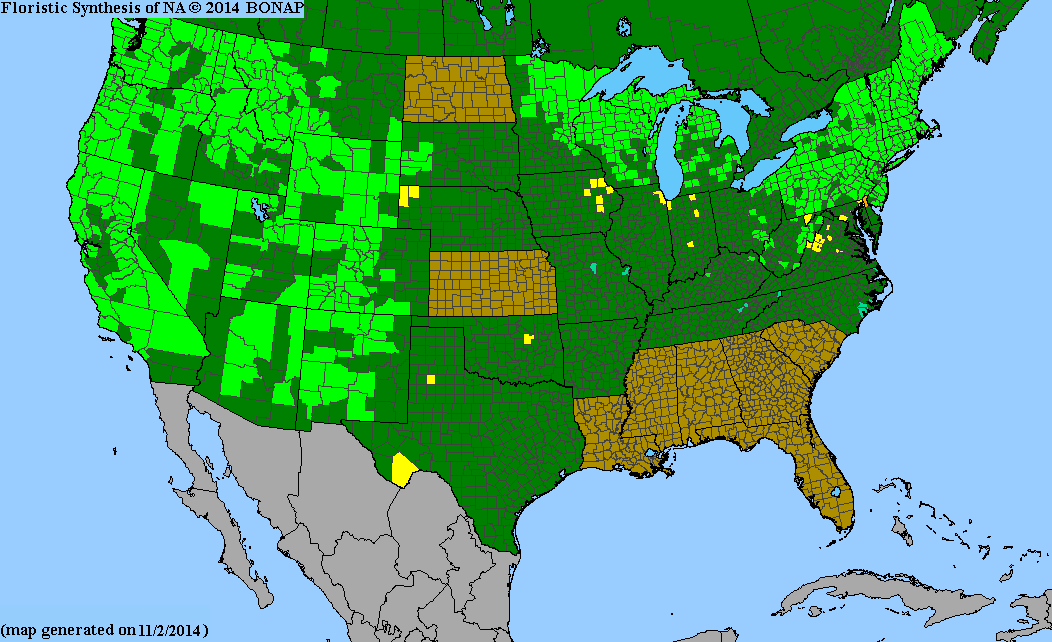
BONAP Range Map:
SE Michigan Monthly Observations:
Previously Known As:
Anaphalis cinnamonea, Anaphalis margaritacea, Antennaria cinnamonea, Antennaria margaritacea, Antennaria margaritacea, Gnaphalium angustifolium
Common Names:
pearly everlasting, western pearly everlasting, pearly immortelle, moonshine, silverleaf, cotton weed, large-flowered everlasting, Indian posy
Coefficient of Conservatism (C):
3.0
— Adaptable
This plant can grow in many different settings, including areas that have been somewhat changed by human activity.
Explained
Coefficient of Wetness (CW):
5.0
— Needs dry ground
This plant almost never grows in wetlands. It needs well-drained soil and can rot in soggy conditions.
Explained
Similar Species / Distinguishing Features:(ⓘ Prompt)
• Native — Sweet Everlasting (Pseudognaphalium obtusifolium): has dingy white to yellow-white bracts that lie flat against the flower head (vs. Pearly Everlasting with bright white bracts, the outer ones loosely ascending); also lacks separate male and female flowers.
• Based on genus patterns:
• Native — Anaphalis occidentalis (western pearly everlasting) has broader leaves and denser flower clusters, but is primarily found in western North America with uncertain presence in Michigan. Based on family patterns:
• Native — Antennaria species (pussytoes) are much smaller, form low mats, and have separate male and female plants.
• Native — Gnaphalium species (cudweeds) are typically annual, have yellow flower heads, and lack the distinct white papery bracts. Based on general practice:
• Horticultural — Achillea ptarmica (sneezewort) has similar white flower clusters but individual flowers are larger with distinct petals and leaves are narrower and more deeply serrated.
• Native — Anaphalis occidentalis (western pearly everlasting) has broader leaves and denser flower clusters, but is primarily found in western North America with uncertain presence in Michigan. Based on family patterns:
• Native — Antennaria species (pussytoes) are much smaller, form low mats, and have separate male and female plants.
• Native — Gnaphalium species (cudweeds) are typically annual, have yellow flower heads, and lack the distinct white papery bracts. Based on general practice:
• Horticultural — Achillea ptarmica (sneezewort) has similar white flower clusters but individual flowers are larger with distinct petals and leaves are narrower and more deeply serrated.
Wikipedia Summary:
Anaphalis margaritacea, commonly known as the western pearly everlasting or pearly everlasting, is an Asian and North American species of flowering perennial plant in the sunflower family.