Windflower, Thimbleweed
Anemone cylindrica
Species Identification
Information needed to identify the plant in the field
Native-MIFlora:
Native
Duration:
perennial
Height:
1'-2'
Stature:
Knee
Bloom Color:
White-Lt. Green
Compact Bloom Range:
JUN - JUL
Light:
Sn, P
Moisture:
D, M
Michigan Flora Description:
Dry sandy barrens, savannas (jack pine, oak, aspen), dunes; fields, roadsides, shores; borders of forests.
Germination Ecology / Real-World Behavior:(ⓘ Prompt)
Long-headed thimbleweed seeds develop in cylindrical cottony clusters during summer, then disperse by wind during fall and winter when the clusters become fluffy white tufts. Seeds require cold stratification (extended cold, moist conditions) to break dormancy and will naturally germinate in spring after experiencing winter temperatures. The species also spreads slowly through underground rhizomes to form small colonies over time.
Based on genus patterns: Seeds disperse in late spring to early summer after fruiting, typically requiring a period of warm-moist followed by cold-moist stratification to break dormancy. Based on family patterns: Ranunculaceae species commonly exhibit morphophysiological dormancy where the embryo must mature before cold stratification can be effective. Based on general patterns: Natural germination typically occurs in spring after winter stratification, with seedlings emerging when soil temperatures warm and moisture is adequate.
Habitat Notes:(ⓘ Prompt)
Thimbleweed grows in dry sandy areas including barrens, oak and jack pine savannas, and dunes throughout Michigan. It's also found along roadsides, field edges, and forest borders. The plant produces distinctive thimble-shaped seed heads that develop into fluffy, cottony masses when ripe. These cottony seed clusters are easily carried by wind, allowing the seeds to disperse across open sandy habitats and disturbed areas where the plant commonly establishes.
Thimbleweed also grows in black soil prairies, limestone glades, and sandy Black Oak savannas across the upper Midwest. The plant produces allelopathic substances that inhibit growth of competing plants, helping it establish in less fertile soils. Wind dispersal occurs when the cylindrical seed heads transform into persistent cottony tufts during fall and winter, with individual seeds attached to white fluffy structures that allow long-distance travel to new prairie and savanna habitats.
Based on species patterns: Anemone cylindrica typically grows in dry prairies, open woodlands, and sandy or rocky soils across the Great Lakes region. Based on genus patterns: Seeds are produced in distinctive cylindrical clusters (hence the name) that elongate significantly as they mature, creating a prominent seedhead. The individual seeds have feathery, plume-like structures (styles) that persist after flowering. Based on family patterns: Seeds disperse primarily by wind, with the persistent feathery styles acting as parachutes to carry seeds away from the parent plant. The cylindrical seedheads can persist into winter, gradually releasing seeds over an extended period as wind and weather break apart the cluster.
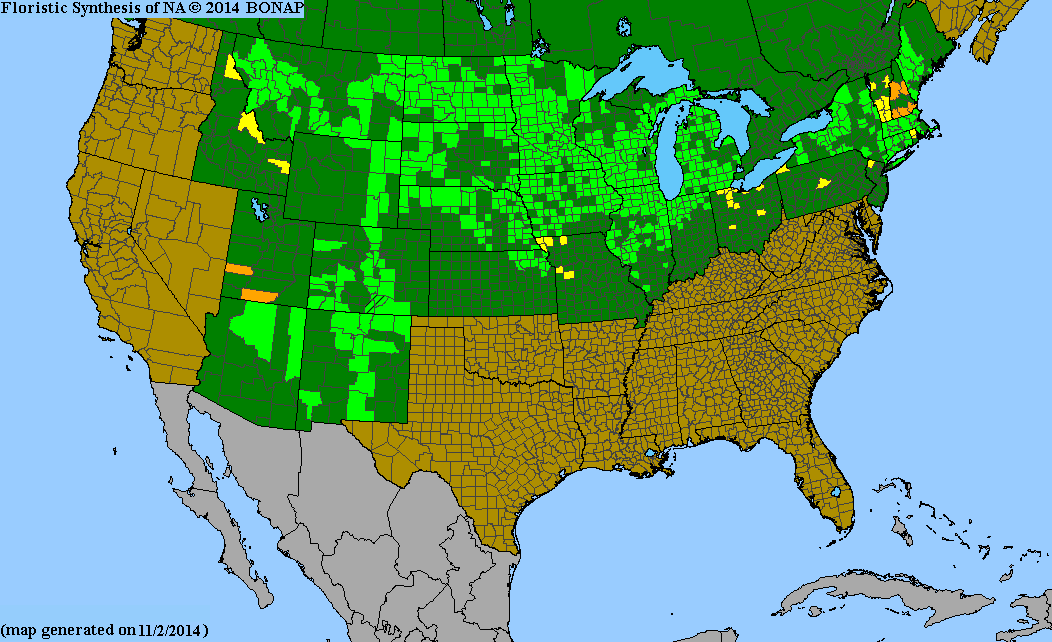
BONAP Range Map:
SE Michigan Monthly Observations:
Common Names:
candle anemone, thimbleweed, long-headed thimbleweed, long-fruited anemone, cylindric-fruited anemone
Coefficient of Conservatism (C):
6.0
— Prefers natural areas
This plant does best in natural areas but can handle some changes to its environment. Finding it suggests the habitat is in decent shape.
Explained
Coefficient of Wetness (CW):
5.0
— Needs dry ground
This plant almost never grows in wetlands. It needs well-drained soil and can rot in soggy conditions.
Explained
Similar Species / Distinguishing Features:(ⓘ Prompt)
• Native — **Anemone virginiana** (tall thimbleweed): Has leaves that are less deeply lobed than A. cylindrica, thimbles are less slender and more gumdrop-shaped rather than elongated, and typically found in partial to full shade rather than open sunny areas.
• Native — **Anemone canadensis** (Canada anemone): Has sessile leaves (no petioles) unlike A. cylindrica which has petioled leaves, and spreads aggressively by rhizomes.
• Native — **Anemone virginiana** (tall thimbleweed): Has leaflets with rounded outer lobes and teeth along the tip half, versus A. cylindrica's wedge-shaped leaflets with lobes fanning out; also has ovoid seed heads often more than 1 cm in diameter versus A. cylindrica's cylindrical seed heads less than 1 cm in diameter, and typically grows taller (up to 4 feet) with shorter cones (under 1 inch) compared to A. cylindrica's 1-2 feet height with cones up to 1.5 inches long.
• Native — **Anemone virginiana** (tall thimbleweed): Has leaflets with rounded outer lobes and teeth along the tip half, versus A. cylindrica's wedge-shaped leaflets with lobes fanning out; also has ovoid seed heads often more than 1 cm in diameter versus A. cylindrica's cylindrical seed heads less than 1 cm in diameter, and typically grows taller (up to 4 feet) with shorter cones (under 1 inch) compared to A. cylindrica's 1-2 feet height with cones up to 1.5 inches long.
Based on genus patterns: Other Anemone species are the primary confusion group, particularly A. canadensis (Canada anemone) which has broader, more deeply divided leaves and spreads by rhizomes, versus A. cylindrica's more finely divided leaves and clumping growth. Based on family patterns: Ranunculus species may cause confusion when not in flower, but typically have glossy, less dissected foliage. Based on general practice: Distinguishing features include A. cylindrica's distinctive cylindrical seed head (hence the name), whitish flowers, and preference for drier prairie conditions compared to most other native anemones that prefer moister sites.
Wikipedia Summary:
Anemone cylindrica is an upright growing, clump forming herbaceous plant species in the genus Anemone and family Ranunculaceae. Plants grow 30–100 centimetres (12–39 in) tall, flowering early summer but often found flowering till late summer, the flowers are greenish-white. After flowering, the fruits are produced in a dense rounded columned spikes 20–35 millimetres (0.79–1.38 in) long. When the fruits, called achenes, are ripe they have gray-white colored, densely woolly styles, that allow them to blow away in the...
Cloudinary Images - Identification
3 images

