Butterfly Milkweed
Asclepias tuberosa
Species Identification
Information needed to identify the plant in the field
Native-MIFlora:
Native
Duration:
perennial
Height:
2'
Stature:
Knee
Bloom Color:
Orange
Compact Bloom Range:
JUN - AUG
Light:
Sn
Moisture:
D, M
Michigan Flora Description:
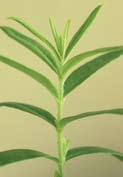
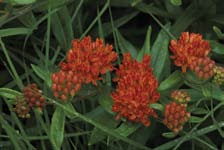
Dry barrens and savannas with oak, sassafras, and/or pines, including jack pine plains; sandy roadsides and fields. The flowers are usually some shade of orange, but may rarely be clear yellow or bicolored. As our only milkless milkweed, with alternate leaves besides, this is a readily recognized plant. It develops a massive, almost woody tuberous root, from which numerous ± lax stems may arise. The flowers are indeed very attractive to butterflies and other insects.
Germination Ecology / Real-World Behavior:(ⓘ Prompt)
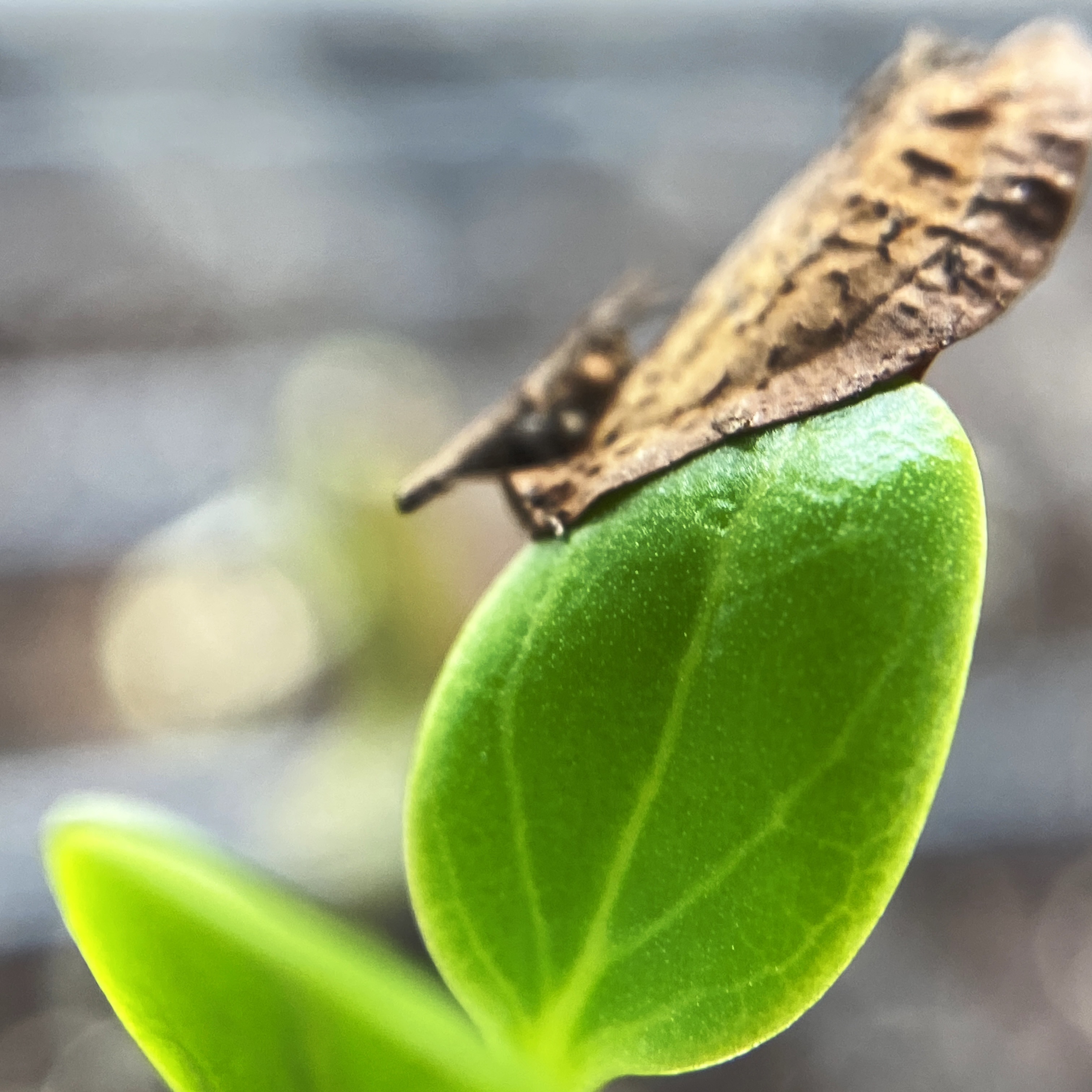
Seeds ripen in late summer to early fall and are naturally dispersed by wind using their silky white tufts. The seeds require cold stratification - about 30 days of moist, cold conditions - to break dormancy. In nature, this happens during winter exposure. Without this cold treatment, seeds will not germinate reliably. Seeds naturally germinate in spring after experiencing winter conditions, typically emerging when soil temperatures warm sufficiently.
Based on genus patterns: Seeds disperse in late fall when follicles split open, releasing wind-carried seeds with white pappus. Based on species patterns: Seeds typically require cold-moist stratification over winter to break physiological dormancy, with germination occurring in spring when soil temperatures warm consistently above 60°F. Natural germination happens primarily in late spring after the stratification requirement is satisfied by winter conditions. Based on general practice: Seeds that don't receive adequate cold treatment may have poor or delayed germination rates.
Habitat Notes:(ⓘ Prompt)
Butterfly weed grows in dry barrens and savannas with oak, sassafras, and pines, including jack pine plains, as well as sandy roadsides and fields in Southeast Michigan. The seeds are dispersed by wind using white floss (pappus) that acts like a parachute, allowing the seeds to float considerable distances from the parent plant. When the brown, elongated seed pods (follicles) mature, they split open along a vertical seam to release the seeds. Each seed has fluffy white fibers attached that expand when dry, creating static-filled masses that can easily fill a room if not collected at the right time. The timing of seed release typically occurs in late summer when the pods have turned brown and are just beginning to split, but before the floss has fully expanded.
Butterfly weed thrives in grasslands, meadows, fields, prairies, open woods, sandy savannas, rocky woodlands and clearings. It commonly grows along anthropogenic (human-disturbed) sites like railroad beds, roadside embankments, abandoned sandy fields, and areas along railroads where it often forms clumps in dry conditions.
Based on species patterns: Asclepias tuberosa typically grows in well-drained, sandy or rocky soils in full sun conditions, commonly found in prairies, old fields, roadsides, and dry open woodlands. Based on family patterns: Seeds develop in follicles (elongated seed pods) that split open when mature, releasing seeds equipped with silky white pappus (fluffy tufts) that enable wind dispersal. The pappus acts like a parachute, allowing seeds to travel considerable distances on air currents during late summer and fall when pods dehisce.
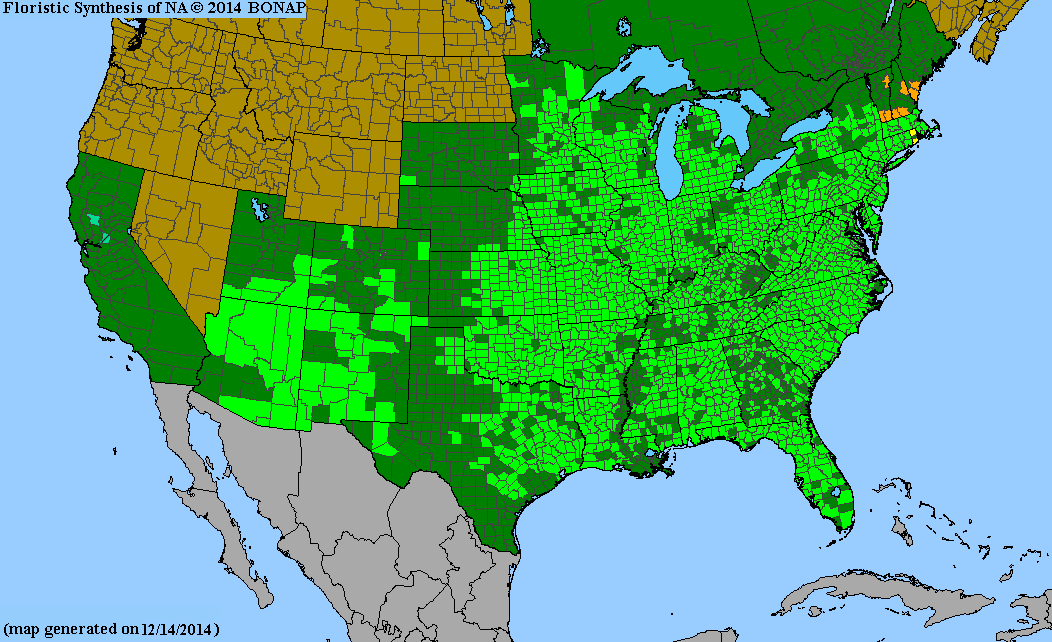
BONAP Range Map:
SE Michigan Monthly Observations:
Common Names:
Butterfly Weed, Butterflyweed, Orange Milkweed, Pleurisy Root, Chigger Flower, Indian Paintbrush, Orange Swallow-wort, Tuber Root, Wind Root, Canada Root
Coefficient of Conservatism (C):
5.0
— Prefers natural areas
This plant does best in natural areas but can handle some changes to its environment. Finding it suggests the habitat is in decent shape.
Explained
Coefficient of Wetness (CW):
5.0
— Needs dry ground
This plant almost never grows in wetlands. It needs well-drained soil and can rot in soggy conditions.
Explained
Similar Species / Distinguishing Features:(ⓘ Prompt)
• Native — Asclepias speciosa (showy milkweed) has opposite leaves and milky sap, unlike butterfly milkweed's alternate leaves and clear sap.
• Native — Asclepias syriaca (common milkweed) has broader, opposite leaves and milky latex, while butterfly milkweed has narrow, alternate leaves and clear sap.
• Native — Asclepias incarnata (swamp milkweed) has opposite leaves, milky sap, and pink flowers, contrasting with butterfly milkweed's alternate leaves, clear sap, and orange flowers.
• Native — Asclepias syriaca (common milkweed) has broader, opposite leaves and milky latex, while butterfly milkweed has narrow, alternate leaves and clear sap.
• Native — Asclepias incarnata (swamp milkweed) has opposite leaves, milky sap, and pink flowers, contrasting with butterfly milkweed's alternate leaves, clear sap, and orange flowers.
• Based on genus patterns:
• Native — Asclepias speciosa (showy milkweed) has larger, broader leaves and pink-purple flowers in rounded clusters rather than orange flat-topped clusters.
• Native — Asclepias incarnata (swamp milkweed) grows in wetter sites and has pink flowers in smaller, more numerous clusters.
• Native — Asclepias syriaca (common milkweed) has much broader oval leaves and pink-purple globe-shaped flower clusters. Based on family patterns:
• Native — Apocynum cannabinum (dogbane) has smaller white or pink bell-shaped flowers and opposite leaves, but shares the milky sap. Based on general practice:
• Horticultural — Garden varieties of Asclepias curassavica (tropical milkweed) may have orange flowers but are annual in Michigan and have different leaf shape and growth habit.
• Native — Asclepias speciosa (showy milkweed) has larger, broader leaves and pink-purple flowers in rounded clusters rather than orange flat-topped clusters.
• Native — Asclepias incarnata (swamp milkweed) grows in wetter sites and has pink flowers in smaller, more numerous clusters.
• Native — Asclepias syriaca (common milkweed) has much broader oval leaves and pink-purple globe-shaped flower clusters. Based on family patterns:
• Native — Apocynum cannabinum (dogbane) has smaller white or pink bell-shaped flowers and opposite leaves, but shares the milky sap. Based on general practice:
• Horticultural — Garden varieties of Asclepias curassavica (tropical milkweed) may have orange flowers but are annual in Michigan and have different leaf shape and growth habit.
Wikipedia Summary:
Asclepias tuberosa is a species of milkweed native to eastern North America. It is a perennial plant growing to 0.3–1 metre (1 ft 0 in–3 ft 3 in) tall, with clustered orange or yellow flowers from early summer to early autumn. The leaves are spirally arranged, lanceolate, 5–12 cm long, and 2–3 cm broad.
Cloudinary Images - Identification
10 images