White Turtlehead
Chelone glabra
Species Identification
Information needed to identify the plant in the field
Native-MIFlora:
Native
Duration:
perennial
Height:
3'
Stature:
Waist
Bloom Color:
White
Compact Bloom Range:
AUG - SEP
Light:
Sn, P
Moisture:
M, Ms, W
Michigan Flora Description:
Moist ground along streams, rivers, ponds, and lakes; swamps (coniferous or hardwood), especially in openings and borders; fens, moist fields and meadows, wet shores, marshes, thickets.
Germination Ecology / Real-World Behavior:(ⓘ Prompt)
White turtlehead seeds are dispersed in fall when capsules (dry seed containers that split open) mature and release winged seeds that can be carried by wind or float on water. Seeds require cold, moist conditions over winter to break dormancy - a process called cold stratification that takes about 6 weeks of chilling. In nature, seeds experience this stratification naturally under snow and cold soil conditions through winter. Germination typically occurs in spring after the stratification period is complete, with seedlings emerging in the first growing season but not flowering until their second year of growth.
Based on genus patterns: Seeds disperse in late fall when capsules split open, typically requiring cold-moist stratification over winter to break dormancy. Based on family patterns: Like many Scrophulariaceae relatives, seeds likely need exposure to fluctuating temperatures and moisture cycles that mimic natural winter conditions. Based on general practice: Germination typically occurs in spring after soil temperatures warm, with seedlings emerging when light and temperature conditions become favorable for growth.
Habitat Notes:(ⓘ Prompt)
Turtlehead grows in consistently moist to wet areas throughout Michigan, including along streams, rivers, ponds, and lakes. It thrives in swamps, fens, wet meadows, marshes, and moist thickets, often appearing in openings and borders of wooded wetlands. The seeds develop in distinctive capsules that split open like a beak when ripe, allowing the small, papery seeds to shake out and disperse on windy days. This wind-dispersal mechanism helps the seeds spread to suitable wet habitats nearby.
Based on genus patterns: Chelone glabra typically inhabits wet soils along streambanks, swamps, wet meadows, and pond margins throughout the Great Lakes region. Based on species patterns: Plants prefer partial shade to full sun in consistently moist to saturated soils and are commonly found in floodplains and wetland edges. Based on family patterns: Seeds develop in capsules that split open when mature, releasing numerous small, flattened seeds with papery wings. Based on genus patterns: The winged seeds are primarily dispersed by water during seasonal flooding or high water events, allowing them to travel along waterways to establish new colonies in suitable wetland habitats downstream.
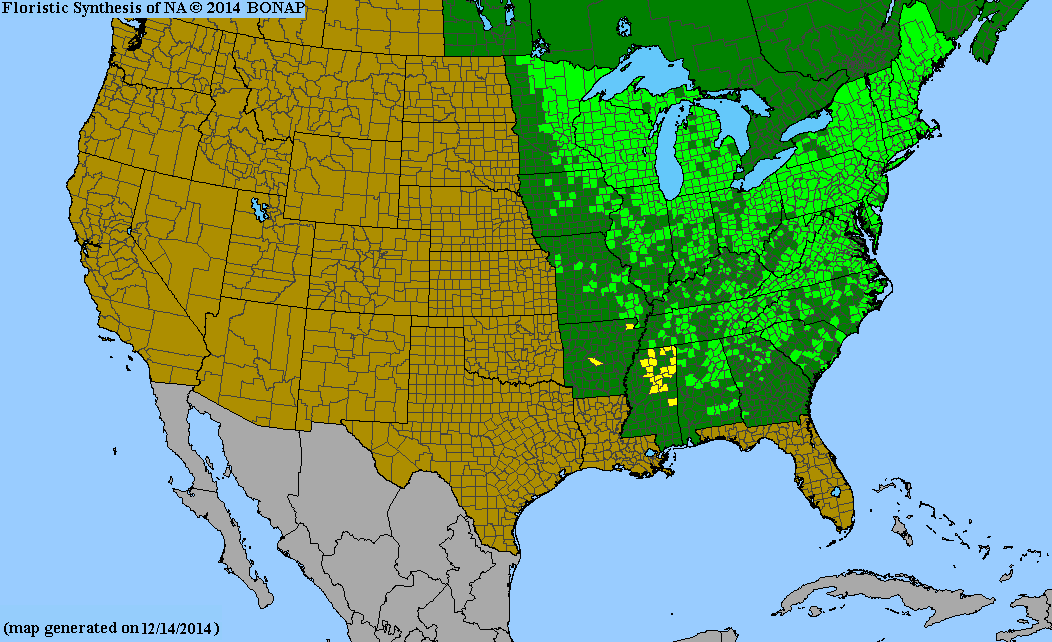
BONAP Range Map:
SE Michigan Monthly Observations:
Previously Known As:
Chelone alba, Chelone capitata, Chelone chlorantha, Chelone elatior
Common Names:
White Turtlehead, Turtlehead, Balmony, Shellflower, Snakehead, Bitter Herb, Salt-rheum Weed, Fishmouth
Coefficient of Conservatism (C):
7.0
— Needs quality habitat
This plant is choosy about where it lives. It strongly prefers natural areas that haven't been heavily disturbed.
Explained
Coefficient of Wetness (CW):
-5.0
— Loves wet feet
This plant almost always grows in wetlands. It thrives standing in water or saturated soil.
Explained
Similar Species / Distinguishing Features:(ⓘ Prompt)
• Native — Chelone obliqua (Pink Turtlehead) has pink flowers and broader leaves with longer petioles (exceeding ½" in length), while White Turtlehead has white flowers and narrower leaves with very short or no petioles.
Based on genus patterns: Chelone obliqua (red turtlehead) is the most commonly confused native species, distinguished by pink to deep rose flowers versus the white to pale pink flowers of C. glabra. Based on family patterns: Penstemon digitalis (foxglove beardtongue) may cause confusion due to similar white tubular flowers, but has a more open flower throat and different leaf arrangement. Based on general horticultural knowledge: Cultivated snapdragons (Antirrhinum) share the closed-mouth flower shape but are typically shorter annual plants with different leaf structure.
Wikipedia Summary:
Chelone glabra (white turtlehead) is an herbaceous species of plant native to North America. Its native range extends from Georgia to Newfoundland and Labrador and from Mississippi to Manitoba. Its natural habitat is wet areas, such as riparian forests and swamps.
Cloudinary Images - Identification
3 images

