Prairie Smoke
Geum triflorum
Species Identification
Information needed to identify the plant in the field
Native-MIFlora:
Native
Duration:
perennial
Height:
1'
Stature:
Ankle
Bloom Color:
Pink
Compact Bloom Range:
APR - JUN
Light:
Sn, P
Moisture:
D, M, Ms
Michigan Flora Description:
Sandy prairies, bluffs, and oak savanna; thin soil over limestone (Drummond Island, Chippewa Co.). The beautiful head of wind-dispersed fruits with very long plumose styles reminds one of Dryas , an arctic-alpine genus of which two species are known from islands along the north shore of Lake Superior but not from Michigan. (They differ from Geum in having simple leaves and ca. 8 petals and sepals, the latter without associated bractlets.)
Germination Ecology / Real-World Behavior:(ⓘ Prompt)
Prairie smoke seeds disperse in late spring to early summer when the feathery plumes (styles) elongate to 2-3 inches and catch the wind. Seeds require cold stratification to break dormancy - they need prolonged cold, moist conditions over winter to germinate the following spring. In nature, seeds are dispersed by wind in late May through June, experience natural stratification through winter under snow, and germinate in early spring (April-May). The species is adapted to northern climates and benefits from the temperature cycling that signals proper germination timing.
Based on genus patterns: Geum triflorum seeds have morphophysiological dormancy requiring both warm and cold stratification to break down internal seed coat barriers and physiological inhibitors. Based on species patterns: Seeds disperse in late spring to early summer with distinctive feathery plumose styles that aid wind dispersal, then undergo a complex dormancy-breaking process over 12-18 months. The seeds typically require a warm stratification period (2-3 months) followed by cold stratification (3-4 months) to germinate the following spring. Based on general practice: Natural germination occurs primarily in spring after seeds have experienced the full seasonal cycle, with germination rates often remaining low even under ideal conditions.
Habitat Notes:(ⓘ Prompt)
Prairie smoke grows in sandy prairies, bluffs, and oak savannas, often in thin soil over limestone in Michigan. The fruits develop into beautiful heads with very long plumose (feathery) styles that create a wispy, smoke-like appearance. These feathery plumes start as hot pink and fade to gray-pink as they mature, while the seeds at the base change from bright green to yellow-beige. Despite their fluffy appearance, the seeds are not effective wind dispersers and are described as "poor fliers" that use a shattering dispersal mechanism instead.
Prairie smoke also thrives in dry gravelly prairies, hill prairies, and rocky clearings. It tolerates a range of soil types including prairie loams, clay, and sand, but consistently prefers well-drained conditions and thin soils over limestone or rocky substrates. The feathery plumes that give the plant its common name are actually the elongated styles of the fruits - after pollination, the bell-like flowers turn upward and these plumes begin growing from the pistils. While the plumes appear designed for wind dispersal, they are surprisingly poor at flight and the seeds rely more on mechanical dispersal when the fruiting heads shatter.
Based on species patterns: Geum triflorum typically grows in native prairies, dry to mesic grasslands, and oak savannas across the northern Great Plains and Great Lakes region. Based on genus patterns: It prefers well-drained soils and can tolerate partial shade but thrives in full sun conditions. Based on species patterns: The distinctive feathery, plume-like styles (seed tails) are the primary dispersal mechanism, allowing seeds to be carried by wind currents. The long, twisted styles with feathery tips create effective wind-catching structures that can transport seeds considerable distances from the parent plant. Seeds are typically dispersed in late spring to early summer when the persistent styles have fully elongated and become most effective for wind dispersal.
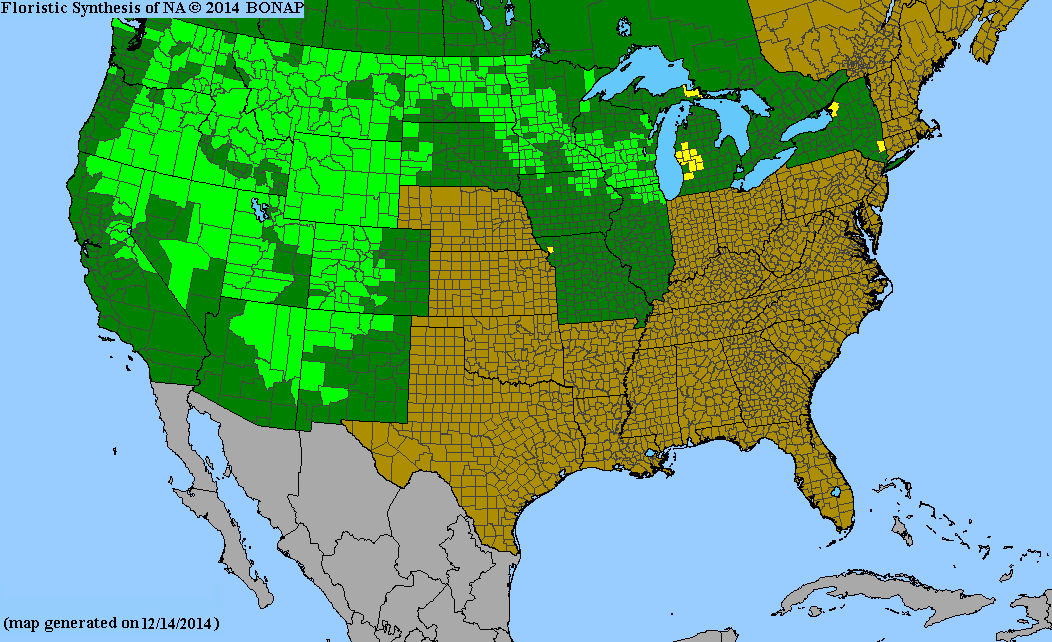
BONAP Range Map:
SE Michigan Monthly Observations:
Previously Known As:
Erythrocoma flavula, Erythrocoma triflorum, Geum grahamii, Geum pubescens, Sieversia ciliata, Sieversia flavula, Sieversia rosea, Sieversia triflora, Sieversia triflora
Common Names:
Prairie Smoke, Old Man's Whiskers, Torch Flower, Three-flowered Avens, Long-plumed Purple Avens, Lion's Beard
Coefficient of Conservatism (C):
8.0
— Needs quality habitat
This plant is choosy about where it lives. It strongly prefers natural areas that haven't been heavily disturbed.
Explained
Coefficient of Wetness (CW):
3.0
— Prefers dry conditions
This plant usually grows in well-drained, drier upland areas and may struggle in wet soils.
Explained
Similar Species / Distinguishing Features:(ⓘ Prompt)
• Native — Geum rivale (Water Avens) has similar reddish nodding flowers but prefers wetlands and marshes rather than dry prairie sites; its flowers are larger and the habitat preference clearly distinguishes it. Other Geum species in the region produce conventional yellow or white flowers with spreading petals, making them easily distinguished from Prairie Smoke's unique nodding reddish bells and feathery seed plumes.
Based on genus patterns: Other Geum species with similar three-flowered arrangements and feathery seed plumes may cause confusion, particularly G. ciliatum if present. Based on family patterns: Within Rosaceae, Potentilla species with similar palmate leaves and yellow flowers differ by having five-petaled flowers in different arrangements and lacking the distinctive feathery plumose styles. Based on general botanical patterns: Young plants before flowering may resemble other rosaceous herbs with compound leaves, but the specific leaflet patterns and hairy characteristics typically distinguish Geum once examined closely.
Wikipedia Summary:
Geum triflorum, (prairie smoke, three-flowered avens, or old man's whiskers) is a spring-blooming perennial herbaceous plant of North America from northern Canada to California and east to New York. The flowers bloom from mid-spring to early summer.
Cloudinary Images - Identification
3 images

