Foxglove/White/Smooth Beardtongue
Penstemon digitalis
Species Identification
Information needed to identify the plant in the field
Native-MIFlora:
Native
Duration:
perennial
Height:
3'-4'
Stature:
Waist
Bloom Color:
White
Compact Bloom Range:
JUN
Light:
Sn, P
Moisture:
D, M, Ms
Michigan Flora Description:
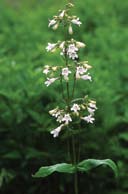
Fields, meadows, and prairie remnants; openings in dry savannas (oak, aspen); along roadsides and railroad beds. Perhaps only adventive north of the middle of the Lower Peninsula. The corolla is white or creamy, usually ± lined or tinged with light pink-violet. The inflorescence is usually ± densely glandular-pubescent. Both this species and P. calycosus are sometimes merged into the more southeastern P. laevigatus Aiton.
Germination Ecology / Real-World Behavior:(ⓘ Prompt)
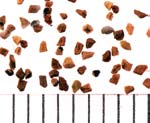
Seeds disperse in fall when oval capsules split open and release numerous small, gray, angular seeds. The flowering stalk eventually falls over to help distribute seeds, and wind can carry the lightweight seeds short distances. Seeds require cold-moist stratification to break dormancy - they need extended cold, damp conditions over winter to germinate properly in spring. Without this winter conditioning, seeds will not sprout.
Based on genus patterns: Seeds are dispersed in late summer to fall when capsules split open and release numerous small seeds. Based on family patterns: Seeds typically exhibit physiological dormancy requiring cold stratification to break down inhibitors and promote uniform germination. Based on genus patterns: Natural germination occurs in spring following winter's cold-moist conditions, with seedlings emerging as soil warms. Seeds may require light for germination and often show improved germination rates after 60-90 days of cold stratification. Some seeds may remain dormant for multiple seasons, creating a natural seed bank.
Habitat Notes:(ⓘ Prompt)
Foxglove beard-tongue grows in fields, meadows, and prairie remnants throughout Michigan, with openings in dry oak and aspen savannas providing ideal conditions. It thrives along roadsides and railroad beds, adapting well to disturbed sites. The species successfully establishes in prairie and savanna restoration projects. Seeds are contained in hard capsule (dry seed containers that split open) that develop a distinctive rusty-brown color and split open like a beak when mature, releasing the small seeds for wind dispersal.
Go Botany confirms it grows in human-disturbed areas, meadows and fields. Illinois Wildflowers adds that it occurs in mesic black soil prairies, upland and floodplain forest openings, woodland borders, thickets, acid gravel seeps, pastures, and abandoned fields. Minnesota Wildflowers notes it appears in wet ditches and upland meadows. The inflorescence eventually falls over after seeds form, helping distribute them locally, while small gray seeds with reticulate (net-like) markings can also be carried short distances by wind.
Based on species patterns: Penstemon digitalis typically grows in open woodlands, prairie edges, and disturbed areas with well-drained soils, tolerating both full sun and partial shade. Based on genus patterns: Seeds are produced in capsules that split open when mature, releasing numerous small, angular seeds that can be dispersed by wind or gravity. The plant often establishes along roadsides and field margins where soil has been disturbed. Based on general practice: This species is commonly found in restoration sites throughout the eastern Great Lakes region including Michigan.
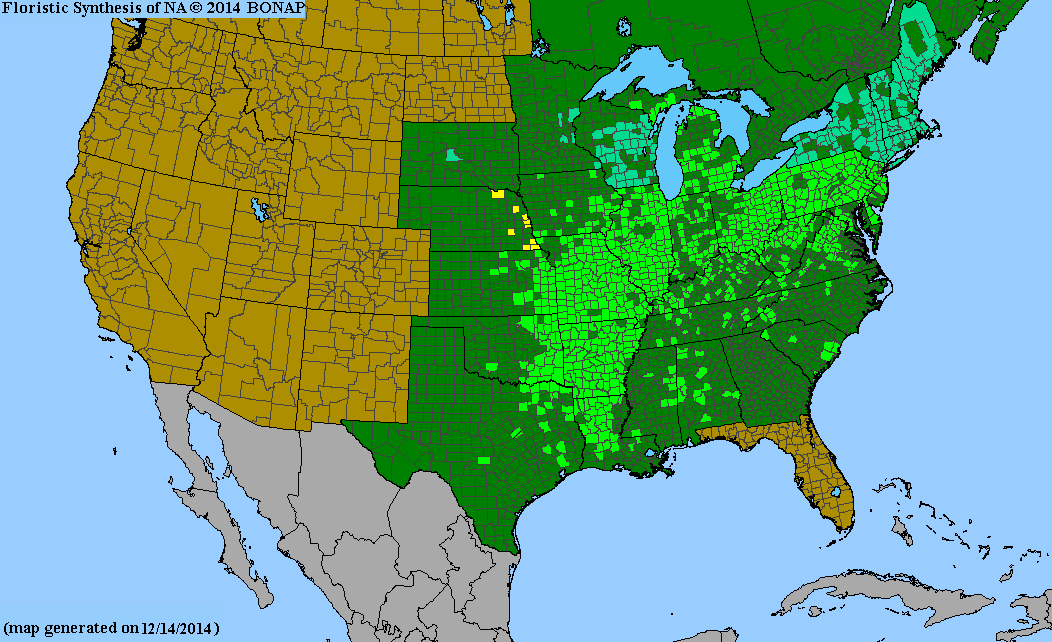
BONAP Range Map:
SE Michigan Monthly Observations:
Previously Known As:
Chelone digitalis, Penstemon alluviorum, Penstemon digitalis
Common Names:
foxglove beardtongue, smooth beardtongue, talus slope penstemon, white beardtongue, foxglove penstemon
Coefficient of Conservatism (C):
2.0
— Adaptable
This plant can grow in many different settings, including areas that have been somewhat changed by human activity.
Explained
Similar Species / Distinguishing Features:(ⓘ Prompt)
• Native — White Penstemon (Penstemon albidus) has much shorter flower clusters (stalks less than 1 inch vs 1-3 inches in foxglove beardtongue) and is generally smaller, reaching only 6-20 inches vs 2-5 feet. Pale Beardtongue (Penstemon pallidus) has smaller flowers and hairy leaves and stems where foxglove beardtongue is hairless except for the flowers.
• Non-native — Purple Foxglove (Digitalis purpurea), a European garden plant, is toxic unlike our native Penstemon species, and has purple speckled flowers rather than white tubular ones.
• Non-native — Purple Foxglove (Digitalis purpurea), a European garden plant, is toxic unlike our native Penstemon species, and has purple speckled flowers rather than white tubular ones.
Based on genus patterns: Other Penstemon species are the most likely confusion, particularly P. calycosus (long-sepal beardtongue) and P. laevigatus (smooth beardtongue), which share the white to pale pink flowers but differ in leaf attachment and sepal length. Based on family patterns: Scrophulariaceae relatives like Chelone glabra (white turtlehead) share similar white tubular flowers but have distinctly different leaf shapes and flower structure. Based on general botanical patterns: Non-native garden escapees from related genera may occasionally be confused in disturbed habitats, though specific confusion taxa would depend on local horticultural preferences.
Wikipedia Summary:
Penstemon digitalis (foxglove beard-tongue, foxglove beardtongue, or talus slope penstemon) is a plant in the plantain family, Plantaginaceae. The flowers are white and are borne in summer. It is native to eastern Canada and eastern and southeastern United States.
Cloudinary Images - Identification
8 images