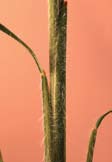
Little Bluestem
Schizachyrium scoparium
Species Identification
Information needed to identify the plant in the field
Native-MIFlora:
Native
Duration:
perennial
Height:
2'-3'
Stature:
Waist
Bloom Color:
Green
Compact Bloom Range:
AUG
Light:
Sn
Moisture:
D, M
Michigan Flora Description:
Andropogon scoparius of Michigan Flora . A characteristic prairie species, but more often seen in Michigan on jack pine plains, sand dunes, and shores; dolomite pavements of Drummond Island; spreading along roadsides and railroads, in sandy old fields, etc. On sand dunes along Lake Michigan occurs subsp. littorale (Nash) Gandhi & Smeins, which is very glaucous, has decumbent bases that root from the lower nodes, and rather broad basal sheaths. It is known from Benzie, Berrien, Leelanau, Manistee, and Mason Cos. and presumably occurs elsewhere. This is sometimes recognized at species rank, but in addition to difficulties in distinguishing specimens, the plant was originally described from the East Coast of the US and it is not clear that Great Lakes dune plants are the same entity.
Germination Ecology / Real-World Behavior:(ⓘ Prompt)
Little bluestem seeds dispersed in fall typically require cold-moist stratification (extended cold period) to break seed dormancy. The seeds naturally overwinter on the ground where freezing temperatures and moisture cycles prepare them for spring germination. Seeds germinate when soil temperatures reach at least 70°F, usually in late spring to early summer. As a warm-season grass, little bluestem does its primary growing during the warm months of summer and early fall, with germination occurring 1-3 weeks after optimal temperature conditions are met in spring.
Based on species patterns: Little bluestem seeds mature in late summer to early fall and disperse throughout fall and winter. Seeds exhibit physiological dormancy requiring both cold-moist stratification and warm-season germination temperatures. Based on genus patterns: Seeds typically require 60-90 days of cold treatment followed by warming soil temperatures in late spring to early summer for germination. Natural germination occurs primarily in spring when soil temperatures reach 60-70°F, though some seeds may germinate in fall under favorable conditions. Based on general practice: Germination is often improved by brief exposure to light, typical of many prairie grasses that establish in gaps or disturbed areas.
Habitat Notes:(ⓘ Prompt)
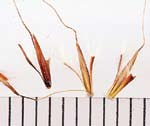
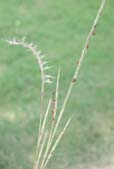
Little bluestem is a characteristic prairie species found throughout Michigan in jack pine plains, sand dunes, shores, and dolomite pavements. It also spreads along roadsides and railroads and into sandy old fields. The seeds are fluffy and white, excellent at catching sunlight like starry constellations on the prairie. Seeds ripen sporadically and can be easily stripped by hand, with more seeds becoming ripe if you return the following week.
Little bluestem grows in grasslands, meadows, fields, woodlands, and rock outcrops across New England, and is an important component of tallgrass prairies throughout the Great Lakes region. In Illinois, it dominates hill prairies and grows in gravel prairies, sand prairies, black soil prairies, scrubby barrens, sandy savannas, and hilltop glades. The species tolerates a wide range of soils from sandy to clay, preferring well-drained conditions and full sun to partial shade. Seeds are dispersed by wind as the fluffy white seed heads catch air currents, with the entire spikelet eventually breaking off and being carried to new locations.
Based on species patterns: Little bluestem is a warm-season prairie grass that thrives in well-drained, often sandy or rocky soils in full sun. It tolerates drought well and is commonly found in native prairies, oak savannas, and disturbed sites that are transitioning back to grassland. Based on general practice: Seeds develop in late summer to fall and are dispersed primarily by wind, with the twisted awns helping seeds drill into soil when moisture conditions change. The seeds can also be dispersed by animals as they brush against the seedheads, and the compact growth form creates favorable microsites for seed germination.
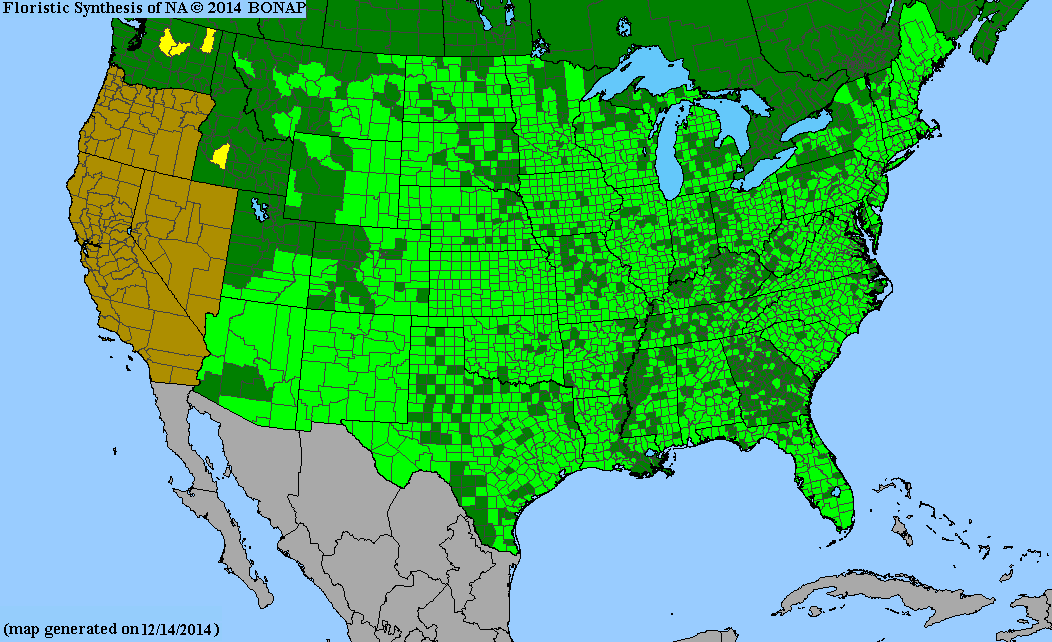
BONAP Range Map:
SE Michigan Monthly Observations:
Previously Known As:
Andropogon divergens, Andropogon divergens, Andropogon divergens, Andropogon flexilis, Andropogon halei, Andropogon littoralis, Andropogon maderensis, Andropogon neomexicanus, Andropogon praematurus, Andropogon preamaturus, Andropogon purpurascens, Andropogon purpurascens, Andropogon scoparius
Common Names:
little bluestem, prairie beardgrass, broom beardgrass, beardgrass
Coefficient of Conservatism (C):
5.0
— Prefers natural areas
This plant does best in natural areas but can handle some changes to its environment. Finding it suggests the habitat is in decent shape.
Explained
Coefficient of Wetness (CW):
3.0
— Prefers dry conditions
This plant usually grows in well-drained, drier upland areas and may struggle in wet soils.
Explained
Similar Species / Distinguishing Features:(ⓘ Prompt)
• Native — Schizachyrium littorale (shore little bluestem): stems decumbent and rooting at nodes, with prominent elongate constriction at leaf sheath apex (vs. little bluestem's upright stems that don't root from lower nodes, with inconspicuous short constriction at sheath apex).
• Native — Andropogon gerardii (big bluestem): much taller (up to 12 feet), has finger-like seed heads resembling turkey's foot, grows in bottomland sites (vs. little bluestem's single spike-like clusters, shorter height, upland sites).
• Native — Andropogon gerardii (big bluestem): much taller (up to 12 feet), has finger-like seed heads resembling turkey's foot, grows in bottomland sites (vs. little bluestem's single spike-like clusters, shorter height, upland sites).
• Based on genus patterns:
• Native — Schizachyrium littorale (seashore bluestem) has similar blue-green foliage but typically grows in sandy coastal areas rather than inland prairies.
• Native — Andropogon gerardii (big bluestem) is much taller (4-8 feet) with broader leaves and distinctive three-parted seed heads.
• Native — Bouteloua curtipendula (sideoats grama) has seeds arranged along one side of the stem rather than in paired clusters.
• Native — Sporobolus heterolepis (prairie dropseed) forms similar clumps but has finer leaves and distinctively fragrant flowers. Based on family patterns:
• Non-native — Festuca species (fescues) lack the reddish fall color and have different seed head structures typical of cool-season grasses.
• Native — Schizachyrium littorale (seashore bluestem) has similar blue-green foliage but typically grows in sandy coastal areas rather than inland prairies.
• Native — Andropogon gerardii (big bluestem) is much taller (4-8 feet) with broader leaves and distinctive three-parted seed heads.
• Native — Bouteloua curtipendula (sideoats grama) has seeds arranged along one side of the stem rather than in paired clusters.
• Native — Sporobolus heterolepis (prairie dropseed) forms similar clumps but has finer leaves and distinctively fragrant flowers. Based on family patterns:
• Non-native — Festuca species (fescues) lack the reddish fall color and have different seed head structures typical of cool-season grasses.
Wikipedia Summary:
Schizachyrium scoparium, commonly known as little bluestem or beard grass, is a North American prairie grass native to most of the United States, except California, Nevada, and Oregon, and a small area north of the Canada–US border. Its greatest manifestation has always been in the Midwestern prairies. Little bluestem is a perennial bunchgrass and is prominent in tallgrass prairie, along with big bluestem (Andropogon gerardi), indiangrass (Sorghastrum nutans) and switchgrass (Panicum virgatum). It is a warm-season...
Cloudinary Images - Identification
8 images