Prairie Dropseed
Sporobolus heterolepis
Species Identification
Information needed to identify the plant in the field
Native-MIFlora:
Native
Duration:
perennial
Height:
2'
Stature:
Knee
Bloom Color:
Green
Compact Bloom Range:
AUG - SEP
Light:
Sn
Moisture:
D, M, Ms
Michigan Flora Description:
Fens, moist to dry prairies, shallow soil on dolomite pavement. The mature grain is spherical, spreading the parts of the spikelet and splitting the palea. Plants have a distinctive musky smell in hot, humid weather; large patches are detectable at a considerable distance.
Germination Ecology / Real-World Behavior:(ⓘ Prompt)
Prairie dropseed seeds mature and naturally disperse (drop) in fall, typically October. The seeds have no dormancy mechanisms and can germinate immediately when conditions are suitable. Seeds prefer cool weather to germinate and need soil temperatures around 70°F or higher for successful sprouting. In nature, seeds that drop in fall may germinate the following spring when soil warms up, or they may wait for optimal moisture and temperature conditions. The species relies primarily on self-seeding for spread rather than vegetative expansion.
Based on genus patterns: Seeds disperse in late fall through winter, with natural germination occurring in spring after soil temperatures warm. Based on species patterns: Seeds exhibit physiological dormancy and require a period of cold-moist stratification to break dormancy and achieve uniform germination. Based on general practice: Natural winter conditions typically provide adequate chilling, with germination beginning when soil temperatures reach approximately 60-70°F in late spring. Seeds may show some germination without stratification but rates and timing are typically improved with cold treatment.
Habitat Notes:(ⓘ Prompt)
Prairie dropseed grows in fens, moist to dry prairies, and shallow soil over dolomite pavement in Michigan. It forms big fountain-like clumps of grass blades and is considered a staple species in prairie restorations and a sign of high-quality prairie remnants. The plants have a distinctive musky or popcorn-like smell on warm, humid summer days, and large patches can be detected from a considerable distance by this scent. The seeds are dispersed as dropseeds - when the spherical grain matures, it causes the spikelet parts to spread and the palea to split, allowing the seeds to drop and scatter from the parent plant.
Prairie dropseed also grows in hill prairies, gravel prairies, black soil prairies, cemetery prairies, prairie remnants along railroads, limestone glades, savannas, thinly wooded rocky bluffs, and grassy fens. In New England, it occurs on thin soils and exposed ledges of woodland ridges, often on trap rock, and on cliffs, balds, or ledges. The species prefers loamy, rocky, or gravelly soils and is found primarily in high-quality natural areas. It's described as having a cilantro smell when brushed against during late summer when seed stalks emerge.
Based on species patterns: Prairie dropseed occurs in dry to mesic prairies, oak savannas, and sandy or rocky soils throughout the Great Lakes region. Based on general practice: It tolerates drought well once established and often grows in full sun to partial shade conditions. Based on species patterns: Seeds are small, smooth, and typically disperse by gravity when they fall from the delicate, open panicles in late summer to early fall. Based on genus patterns: The seeds may also be carried short distances by wind or collected and cached by small mammals and ants.
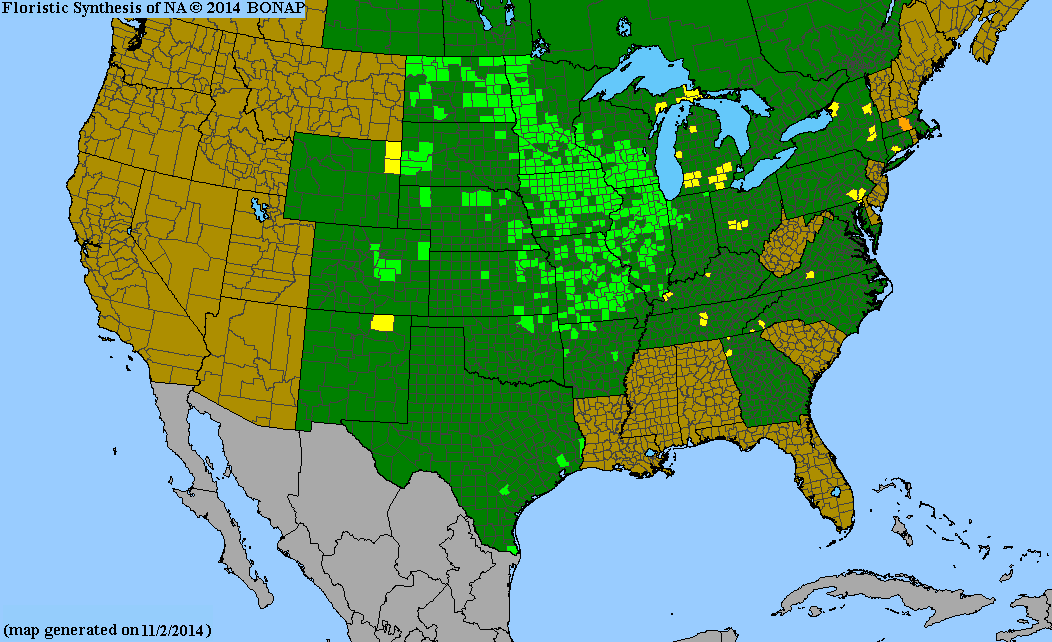
BONAP Range Map:
SE Michigan Monthly Observations:
Previously Known As:
Agrostis heterolepis, Vilfa heterolepis
Common Names:
prairie dropseed, northern dropseed
Coefficient of Conservatism (C):
10.0
— Rare habitat specialist
This plant only thrives in high-quality natural areas. Finding it is a sign you're in a special place worth protecting.
Explained
Coefficient of Wetness (CW):
3.0
— Prefers dry conditions
This plant usually grows in well-drained, drier upland areas and may struggle in wet soils.
Explained
Similar Species / Distinguishing Features:(ⓘ Prompt)
• Native — Sporobolus cryptandrus (Sand Dropseed): spikelets 1.5-2.7 mm long versus 3-6 mm in prairie dropseed, anthers 0.5-1 mm long versus 1.7-3 mm, and conspicuous tuft of hairs at apex of leaf sheath versus no conspicuous tuft in prairie dropseed. Other Sporobolus species have narrow spike-like inflorescences often partially hidden by sheaths, while prairie dropseed has long, open, airy panicles extending well beyond the leaves.
• Based on genus patterns: Other Sporobolus species like S. cryptandrus (sand dropseed) have similar fine-textured foliage but typically shorter stature and different seed head structures. Based on family patterns: Muhlenbergia species (muhly grasses) can appear similar with fine leaves and airy panicles, but typically have different spikelet arrangements and often purple-tinged seed heads.
• Native — Deschampsia cespitosa (tufted hairgrass) forms similar dense tufts but has broader leaves and more open panicles. Based on general practice: Prairie dropseed is distinguished by its extremely fine, thread-like leaves, distinctive fruity fragrance when crushed, and orange-bronze fall color that persists through winter.
• Native — Deschampsia cespitosa (tufted hairgrass) forms similar dense tufts but has broader leaves and more open panicles. Based on general practice: Prairie dropseed is distinguished by its extremely fine, thread-like leaves, distinctive fruity fragrance when crushed, and orange-bronze fall color that persists through winter.
Wikipedia Summary:
Sporobolus heterolepis, commonly known as prairie dropseed, is a species of prairie grass native to the tallgrass and mixed grass prairies of central North America from Texas to southern Canada. It is also found further east, all the way to the Atlantic coast of the United States and Canada, but is much less common beyond the Great Plains and is restricted to specialized habitats. It is found in 24 states and 4 Canadian provinces.
Cloudinary Images - Identification
3 images

