Wood Poppy
Stylophorum diphyllum
Species Identification
Information needed to identify the plant in the field
Native-MIFlora:
Native
Duration:
perennial
Height:
1'-2'
Stature:
Knee
Bloom Color:
Yellow
Compact Bloom Range:
APR - JUN
Light:
P, Sh
Moisture:
M, Ms
Michigan Flora Description:
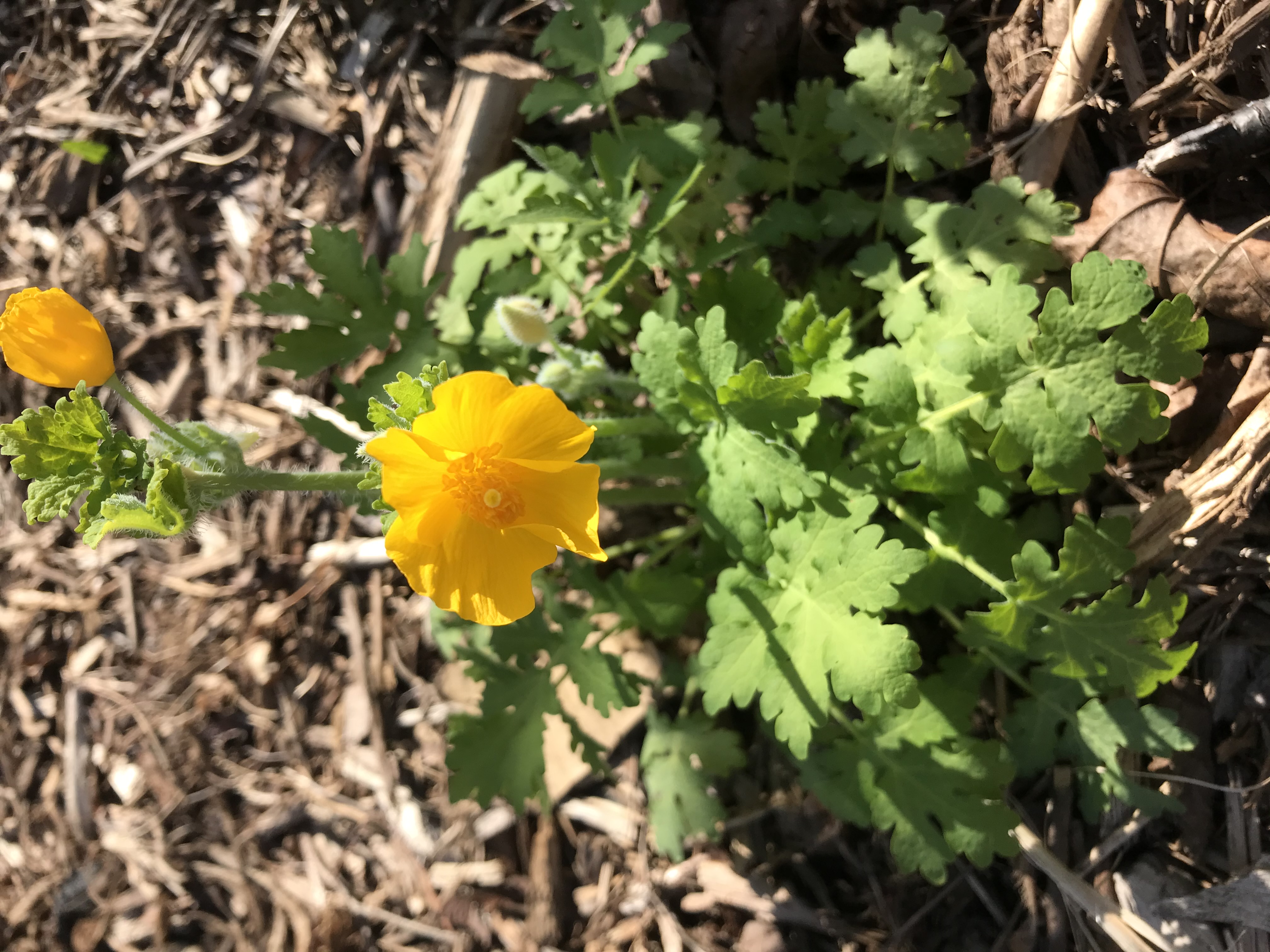
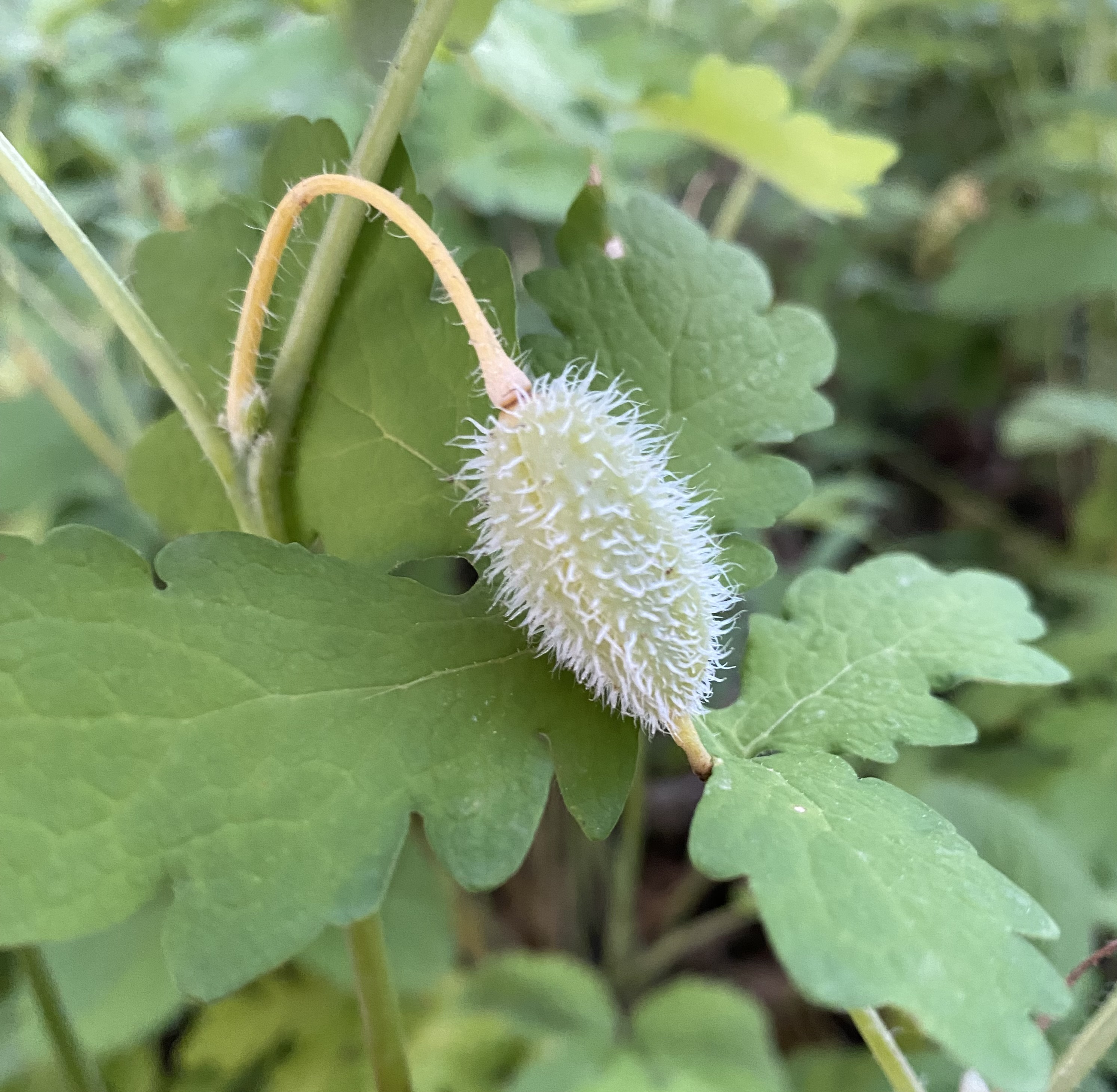
Deciduous forests, rather local. This is our only native yellow-flowered poppy. The distinctive fat-ellipsoid fruit with hairy body and long beak well distinguishes it from all other species we have in the family, native or not. The leaves are very pale beneath. The petals are 17–30 mm long. Chelidonium majus L. has very similar foliage but much smaller flowers and slender fruit. This is a showy plant, often cultivated in wildflower gardens, but none of our occurrences are obviously spread from cultivation, though it would be nice to have more details for the easternmost collection, B. A. Walpole's from "College Woods" in East Lansing.
Germination Ecology / Real-World Behavior:(ⓘ Prompt)
Celandine poppy seeds ripen in late spring to early summer and are dispersed by ants attracted to white oil bodies (elaisomes) attached to each dark brown seed. Seeds have built-in dormancy mechanisms that require cold, moist conditions over winter to break dormancy and allow germination. Natural germination occurs in spring after seeds have experienced months of cold stratification under snow and leaf litter. Seeds must not be allowed to dry out completely, as this can damage viability.
Based on genus patterns: Seeds are dispersed by ants (myrmecochory) via elaiosomes (fatty seed appendages) in late spring to early summer. Based on family patterns: Seeds typically exhibit physiological dormancy requiring cold-moist stratification to break embryo dormancy. Based on species patterns: Natural germination occurs in spring following winter stratification, with seedlings emerging in early to mid-spring when soil temperatures warm. The species shows typical woodland ephemeral behavior with seeds requiring the cold winter period to simulate natural seasonal cycling before germination can proceed.
Habitat Notes:(ⓘ Prompt)
Wood poppy grows in deciduous forests throughout Michigan, where it's rather local in distribution. This native yellow-flowered poppy produces distinctive fat, ellipsoid fruits with hairy bodies and long beaks that help distinguish it from other members of the poppy family. The plant has pale leaves beneath and showy yellow flowers with petals 17-30 mm long. Wood poppy disperses its seeds when the mature capsule splits open, releasing the seeds near the parent plant in the forest understory. This dispersal pattern helps the species establish in suitable deciduous forest habitats where conditions are right for germination and growth.
Wood poppy seeds have white oil-rich appendages called elaisomes that attract ants, which carry the seeds away from the parent plant to establish new colonies in suitable forest locations. This ant dispersal mechanism helps explain how seedlings can emerge in distant areas from the mother plant, extending beyond the initial seed drop zone. The species thrives in rich, mesic deciduous woodlands, particularly on lower slopes of ravines, bases of bluffs, and rocky stream banks where calcareous soils provide optimal growing conditions.
Based on species patterns: Stylophorum diphyllum inhabits rich, moist deciduous woodlands with deep, well-drained soils high in organic matter. Based on genus patterns: It typically grows in partial to full shade under mature canopies of maple, beech, and tulip tree, often on slopes or in ravines where leaf litter accumulates. Based on life-history patterns: Seeds develop in distinctive nodding capsules that split open when ripe, dropping seeds directly below the parent plant where they may be secondarily dispersed by ants attracted to oil-rich appendages (elaiosomes). The bright orange sap and ephemeral spring flowering align with typical woodland ephemeral strategies.
BONAP Range Map:
SE Michigan Monthly Observations:
External Reference URLs:
Previously Known As:
Chelidonium diphyllum, Chelidonium petiolatum, Chelidonium petiolatum, Meconopsis crassifolia, Meconopsis diphylla, Meconopsis petiolata, Stylophorum ohiense, Stylophorum petiolatum
Common Names:
celandine poppy, wood poppy, yellow wood poppy
Coefficient of Conservatism (C):
10.0
— Rare habitat specialist
This plant only thrives in high-quality natural areas. Finding it is a sign you're in a special place worth protecting.
Explained
Coefficient of Wetness (CW):
5.0
— Needs dry ground
This plant almost never grows in wetlands. It needs well-drained soil and can rot in soggy conditions.
Explained
Similar Species / Distinguishing Features:(ⓘ Prompt)
• Non-native — Greater celandine (Chelidonium majus) has very similar foliage with pale undersides but produces much smaller flowers and slender seed pods, compared to wood poppy's larger flowers (petals 17-30 mm long) and distinctive fat, ellipsoid seed pods with hairy bodies and long beaks.
• Native — Bloodroot (Sanguinaria canadensis) also has yellow-orange sap and early spring blooms but has white flowers (not yellow) and distinctive palmate lobed leaves that emerge wrapped around the flower stem.
• Non-native — Greater celandine (Chelidonium majus) has nearly identical foliage and yellow sap but produces much smaller flowers (less than 0.5 inches across vs. 1.5-2 inches), blooms in summer (not spring), is biennial (not perennial), and has hairless, narrow cylindrical seed pods that stand erect rather than wood poppy's hairy, ovoid pods that nod downward.
• Non-native — Greater celandine (Chelidonium majus) has nearly identical foliage and yellow sap but produces much smaller flowers (less than 0.5 inches across vs. 1.5-2 inches), blooms in summer (not spring), is biennial (not perennial), and has hairless, narrow cylindrical seed pods that stand erect rather than wood poppy's hairy, ovoid pods that nod downward.
Based on genus patterns: Stylophorum canadense (Canadian celandine poppy) is most easily confused but has smaller flowers and different leaf arrangements. Based on family patterns: Chelidonium majus (greater celandine) shares the yellow flowers and similar sap but has more deeply divided leaves and smaller individual flowers. Based on general botanical patterns: Ranunculus species (buttercups) may cause confusion when not in flower due to similar woodland habitat preferences, but lack the distinctive lobed leaves and orange sap.
Cloudinary Images - Identification
2 images