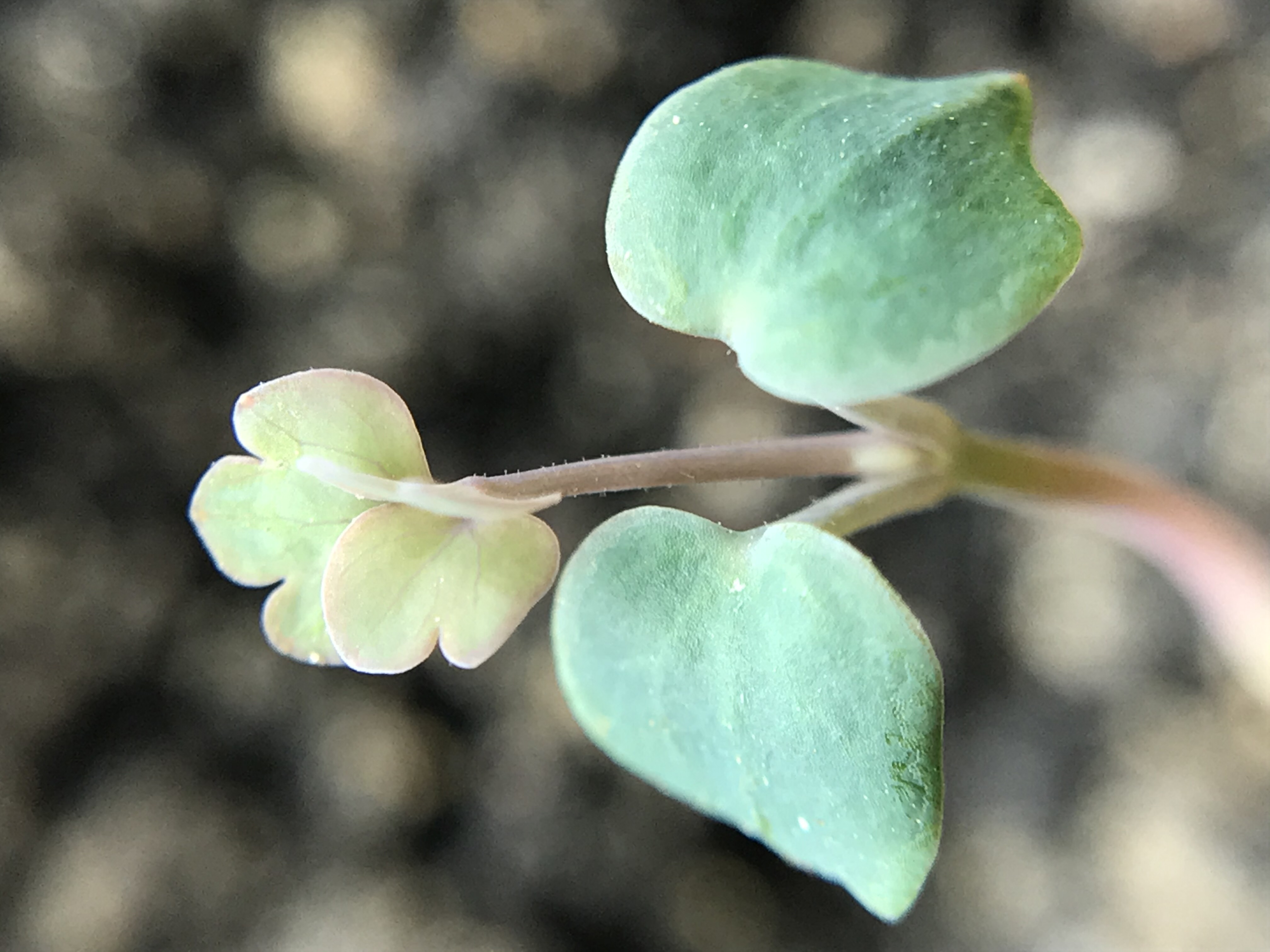
Early Meadow Rue
Thalictrum dioicum
Species Identification
Information needed to identify the plant in the field
Native-MIFlora:
Native
Duration:
perennial
Height:
1.5'-2'
Stature:
Knee
Bloom Color:
Pale Green
Compact Bloom Range:
APR - MAY
Light:
P, Sh
Moisture:
M, Ms
Michigan Flora Description:
Typically in rich deciduous forests, often on slopes; also in oak-hickory forests and thickets along rivers. This is a small and very graceful early bloomer flowering late April to mid-May depending on the season and latitude. Plants are usually less than 5 dm when the flowers open, though there is substantial dimorphism between male and female plants; the females are taller, quickly becoming twice as tall as the males, sometimes nearly a meter tall when friuts are ripe. The glabrous leaflets are thin in texture, with flat (not revolute) margins; the achenes are shorter, less prominently beaked, and more symmetrical than in our other species with an inconspicuous perianth, which additionally flower later.
Germination Ecology / Real-World Behavior:(ⓘ Prompt)
Seeds develop in late spring to early summer after wind pollination, with achenes (small dry seeds) maturing by late May through June. The seeds have no special dormancy mechanisms that require cold treatment - they can germinate the following spring after natural winter conditioning. In nature, seeds disperse in summer and experience natural weathering over winter, then germinate the next growing season. The plant also spreads slowly by underground rhizomes, creating small colonies over time.
Based on genus patterns: Thalictrum species typically produce seeds that disperse in late summer to early fall and require cold-moist stratification to break physiological dormancy. Based on family patterns: As members of Ranunculaceae, seeds often have complex dormancy mechanisms requiring extended cold treatment. Based on genus patterns: Natural germination occurs in spring after winter conditioning, with seedlings emerging as soil warms. The dormancy mechanism prevents immediate germination and ensures seeds overwinter before sprouting during favorable spring conditions.
Habitat Notes:(ⓘ Prompt)
Early meadow rue grows in rich deciduous forests, often on slopes, and also in oak-hickory forests and thickets along rivers in Michigan. This graceful early bloomer flowers from late April to mid-May, with female plants becoming much taller than males as fruits develop. The flowers are subtle and wind-pollinated, meaning pollen is carried by air currents rather than by insects. The seeds are football-shaped achenes (small dry seeds) with parallel striations that shatter easily when ripe, naturally dispersing by falling from the plant when touched by wind or passing animals.
Early meadow rue also grows in floodplains, shores of rivers or lakes, rich mesic woodlands, wooded clay slopes, shaded areas near cliffs, and rocky ravines. In Illinois, it is typically found in maple-basswood woodlands where it blooms before the canopy trees have fully developed their leaves. The achenes are ellipsoid (oval-shaped), pointed at both ends, and strongly ribbed with distinct vertical ridges.
Based on species patterns: Thalictrum dioicum typically grows in rich, moist deciduous woodlands and rocky slopes in shaded to partially shaded conditions. Based on genus patterns: The small, dry achenes (seeds) lack wings or specialized dispersal structures and are primarily gravity-dispersed, falling close to the parent plant in late summer. Based on life-history patterns: Seeds may also be secondarily dispersed by small mammals or through water movement during spring runoff in woodland settings.
BONAP Range Map:

SE Michigan Monthly Observations:
Previously Known As:
Leucocoma dioica, Thalictrum heterophyllum, Thalictrum heterophyllum, Thalictrum labradoricum, Thalictrum laevigatum, Thalictrum pauciflorum, Thalictrum pulchellum, Thalictrum pulchellum, Thalictrum purpurascens
Common Names:
Early Meadow-rue, Early Meadowrue, Quicksilver Weed, Feathery Meadow-rue
Coefficient of Conservatism (C):
6.0
— Prefers natural areas
This plant does best in natural areas but can handle some changes to its environment. Finding it suggests the habitat is in decent shape.
Explained
Coefficient of Wetness (CW):
3.0
— Prefers dry conditions
This plant usually grows in well-drained, drier upland areas and may struggle in wet soils.
Explained
Similar Species / Distinguishing Features:(ⓘ Prompt)
• Native — **Tall Meadow Rue (Thalictrum dasycarpum)** is much taller (up to 6 feet vs. 2 feet), blooms later in summer when Early Meadow Rue is already going to seed, and has leaflets with only 2-3 lobes rather than the 5-9 lobes typical of Early Meadow Rue.
• Native — **Veiny Meadow Rue (Thalictrum venulosum)** also blooms later in the season and has leaflets with only 3-5 lobes compared to Early Meadow Rue's more deeply divided leaflets with 5-9 lobes. Early Meadow Rue is distinctive for its earlier spring blooming time, shorter stature, woodland habitat preference, and more finely divided leaflets with numerous rounded lobes.
• Native — **Veiny Meadow Rue (Thalictrum venulosum)** also blooms later in the season and has leaflets with only 3-5 lobes compared to Early Meadow Rue's more deeply divided leaflets with 5-9 lobes. Early Meadow Rue is distinctive for its earlier spring blooming time, shorter stature, woodland habitat preference, and more finely divided leaflets with numerous rounded lobes.
Based on genus patterns: Other Thalictrum species are the most likely confusion, particularly T. dasycarpum (purple meadow-rue) which has similar compound leaves but grows much taller and has purple-tinged stems versus the typically green stems of early meadow-rue. Based on family patterns: Aquilegia species (columbines) share the compound leaflet arrangement but have showy spurred flowers versus the small apetalous clusters. Based on general botanical patterns: Young Actaea species (baneberries) may appear similar in early growth stages due to compound leaves, but develop different flower and fruit structures.
Wikipedia Summary:
Thalictrum dioicum, the early meadow-rue or quicksilver-weed, is a species of herbaceous plants in the family Ranunculaceae. Plants are typically upright growing woodland natives from Colorado Rocky Mountain forests to central and eastern North America including parts of south eastern Canada. This species has dioecious plants, with male and female flowers on separate plants blooming in early to mid spring.
Cloudinary Images - Identification
8 images