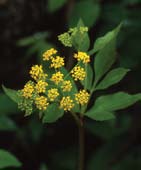
Golden Alexanders
Zizia aurea
Species Identification
Information needed to identify the plant in the field
Native-MIFlora:
Native
Duration:
perennial
Height:
2'-3'
Stature:
Knee
Bloom Color:
Yellow
Compact Bloom Range:
MAY - JUN
Light:
P, Sh
Moisture:
M
Michigan Flora Description:
Forests, especially swampy ones; more often in fens and sedge meadows, with tamarack and poison sumac, in openings and thickets on river banks; and fencerows. Showy and fairly early blooming, this is sometimes cultivated, and some outlying northern records from along roadsides may be spread from cultivation.
Germination Ecology / Real-World Behavior:(ⓘ Prompt)
Seeds disperse in late summer when the dry, two-sectioned fruits split open and drop. They require cold stratification over winter to break dormancy, naturally germinating in spring after experiencing months of cold, moist conditions under snow cover. Prairie Moon notes that seeds planted outdoors typically don't germinate until the following spring due to these built-in dormancy mechanisms. Illinois Wildflowers mentions that seeds can be difficult to germinate without proper treatment.
Based on genus patterns: Zizia aurea seeds typically disperse in late summer to early fall when umbels mature and dry. Based on family patterns: Seeds likely exhibit physiological dormancy common in Apiaceae, requiring cold-moist stratification to break dormancy mechanisms. Based on general practice: Natural germination occurs in spring following winter cold exposure, with seeds responding to warming soil temperatures and increasing daylight. Based on genus patterns: Seeds may show variable germination timing over 1-2 seasons rather than uniform spring emergence.
Habitat Notes:(ⓘ Prompt)
Golden alexanders grows in forests (especially swampy ones), fens and sedge meadows with tamarack and poison sumac, openings and thickets on river banks, and fencerows. It's also found in mesic to wet-mesic prairies, open woodlands, savannas, and fens ranging from wet to dry conditions. The seeds shatter when ripe, meaning they fall from the plant naturally as part of their dispersal mechanism. Seeds ripen from green to brown and become easy to strip by hand when mature, indicating they're ready to disperse naturally.
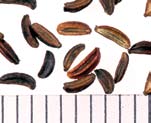
Also found in anthropogenic (human-disturbed) habitats, floodplains, meadows and fields, shores of rivers or lakes, moist black soil prairies, limestone glades, thinly wooded bluffs, powerline clearances in wooded areas, abandoned fields, and along streams. The plant adapts readily to habitat restorations and occurs in both degraded and higher quality habitats. Seeds are oblong and flattened with lighter-colored longitudinal ridges, eventually splitting into two sections when the schizocarp (fruit that splits into segments) matures.
Based on genus patterns: Zizia aurea typically grows in moist to moderately dry prairies, meadows, and open woodlands across the eastern United States. Based on family patterns: As a member of Apiaceae, it produces small seeds in umbrella-shaped flower clusters (umbels) that mature in late summer. Based on genus patterns: Seeds are oval, ribbed, and lack the prominent wings found in some other carrot family members. The seeds fall close to the parent plant when ripe, though they may be secondarily dispersed by water during spring flooding in wetland margins or by small animals that accidentally carry them in fur or feathers.
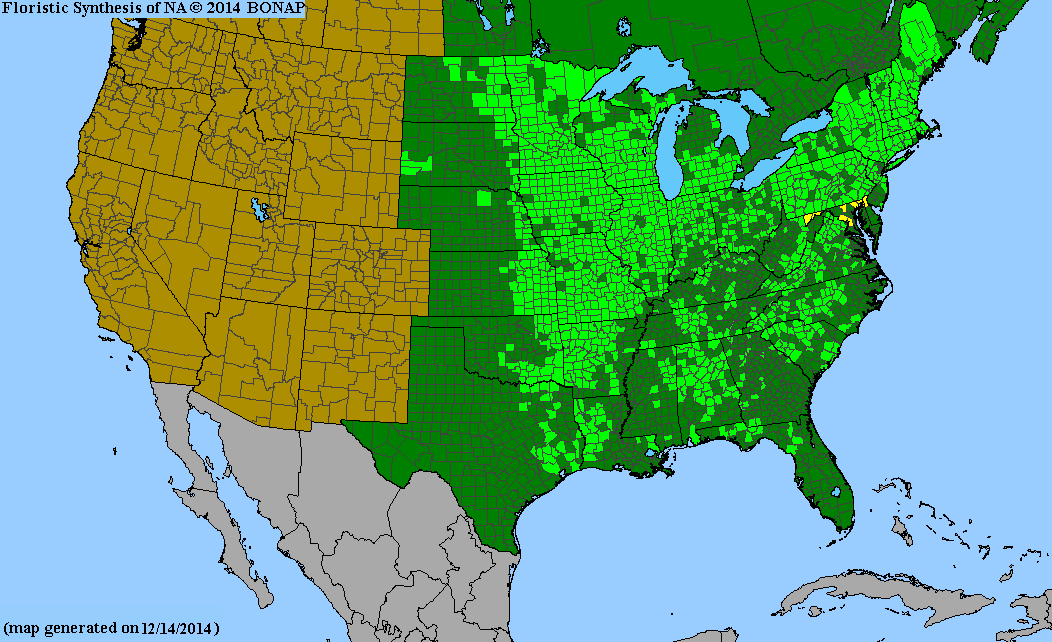
BONAP Range Map:
SE Michigan Monthly Observations:
Previously Known As:
Carum aureum, Carum aureum, Sison aureum, Smyrnium acuminatum, Smyrnium aureum, Smyrnium luteum
Common Names:
Golden Alexanders, Golden Alexander, Early Meadow Parsnip, Golden Zizia
Coefficient of Conservatism (C):
6.0
— Prefers natural areas
This plant does best in natural areas but can handle some changes to its environment. Finding it suggests the habitat is in decent shape.
Explained
Similar Species / Distinguishing Features:(ⓘ Prompt)
• Native — **Heart-leaved Alexanders** *(Zizia aptera)*: Has simple, heart-shaped basal leaves rather than compound leaves divided into leaflets.
• Native — **Yellow Pimpernel** *(Taenidia integerrima)*: Has compound leaves but with smooth-edged (untoothed) leaflets and more open, airy flower clusters.
• Native — **Meadow Parsnip** *(Thaspium trifoliatum)*: Sometimes also called Golden Alexanders; has only 3 lance-shaped, smooth-edged leaflets per leaf and winged seeds, plus the central flower in each cluster has a short stalk rather than being stalkless.
• Native — **Hairy-jointed Meadow Parsnip** *(Thaspium barbinode)*: Has winged fruits and minute hairs around leaf nodes and at the base of flower clusters.
• Non-native — **Wild Parsnip** *(Pastinaca sativa)*: Much larger plant (4-5+ feet tall vs 1-3 feet), larger flower clusters (up to 8 inches across), duller greenish-yellow flowers, leaves divided only once with up to 15 leaflets, and blooms later in summer when Golden Alexanders are finishing.
• Native — **Yellow Pimpernel** *(Taenidia integerrima)*: Has compound leaves but with smooth-edged (untoothed) leaflets and more open, airy flower clusters.
• Native — **Meadow Parsnip** *(Thaspium trifoliatum)*: Sometimes also called Golden Alexanders; has only 3 lance-shaped, smooth-edged leaflets per leaf and winged seeds, plus the central flower in each cluster has a short stalk rather than being stalkless.
• Native — **Hairy-jointed Meadow Parsnip** *(Thaspium barbinode)*: Has winged fruits and minute hairs around leaf nodes and at the base of flower clusters.
• Non-native — **Wild Parsnip** *(Pastinaca sativa)*: Much larger plant (4-5+ feet tall vs 1-3 feet), larger flower clusters (up to 8 inches across), duller greenish-yellow flowers, leaves divided only once with up to 15 leaflets, and blooms later in summer when Golden Alexanders are finishing.
Based on genus patterns: Zizia aptera (heart-leaved golden alexanders) is the most commonly confused native species, distinguished by having simple basal leaves rather than compound leaves. Based on family patterns: Pastinaca sativa (wild parsnip) is a non-native species with similar yellow umbel flowers but typically much larger, coarser foliage and pale yellow rather than bright golden-yellow flowers. Thaspium trifoliatum (meadow parsnip) is another native with yellow umbels but has three-leaflet compound leaves rather than the finely divided leaflets of golden alexanders.
Wikipedia Summary:
Zizia aurea (golden alexanders, golden zizia) is a flowering perennial forb of the carrot family (Apiaceae). It is hardy in USDA zones 4-9. It can be found from New Brunswick to Saskatchewan in Canada, south to Florida and Texas in the United States.
Cloudinary Images - Identification
8 images